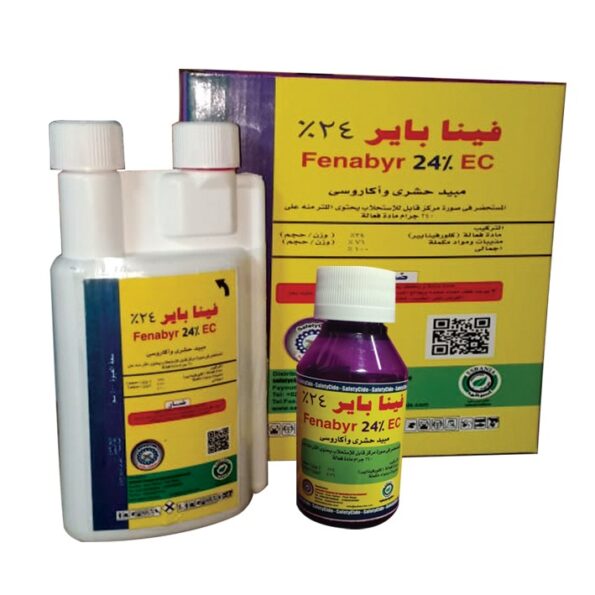
Fenabyr
1.00EGP 0.00EGP
the definition:
Fina Bayer is available in the form of a concentrate that can be emulsified and the use of natural solvents makes the compound’s efficiency higher than the permeability through the skin of the caterpillars, as well as the local permeability in the leaf epidermis, which facilitates the access of the active substance to the larvae located under the leaf epidermis, such as (tunnel makers - Tuta absoluta).
Venapyr is an acaricidal and insecticide. It belongs to a new chemical group (pyrrole) that was discovered among natural insecticides.
Vinapyr is an acaricide with a very effective and long-lasting effect against various acaricides, thus protecting crops during the growing season with fewer sprays compared to many sprays with other pesticides.
Venapyr is an acaricide with a new, distinctive and effective formula against acaricides that have gained immunity from other acaricides. Tests showed that there are no strains resistant to the active ingredient chlorfenapyr.
Pre-harvest period, usage rate, crop pest
3 days 300 cm/acre beet fly sugar beet
21 days 75 cm/100 liters of water Citrus scale insects
Global connections:
Usage rate, crop lesion
250 cm/100 liters of onion thrips
50 cm/100 liters of water from potato manna
50 cm/100 liters of manna water, bean tunnel makers
100-125 cm/100 liters of water: aphids, whiteflies, cucurbit thrips
100 cm / 100 liters of water Aphids, whiteflies, mealybugs, scale insects, ornamental plants
100 cm / 100 liters of water, manna, jassid, peach - apricot
350 cm/acre, injected with drip irrigation for grape mealybugs
350 cm / 100 liters of water or 500 cm / acre by injection with drip irrigation Tunnel makers, mealybugs, citrus scale insects
20-30 cm/palm 100 cm/100 liters of water Red palm weevil, palm scale insects
Based on 0 reviews
|
|
|
0% |
|
|
|
0% |
|
|
|
0% |
|
|
|
0% |
|
|
|
0% |
Related products
Installation:
Free amino acids: 45%
Nitrogen:20%
Compound benefits
Nitroaminofertilizer in the form of a paste contains a high percentage of amino acids and nitrogen in a free form that is easily absorbed by all vegetable and fruit crops to stimulate metabolism and increase plant energy.
Nitroamino is characterized by providing the binding energy between amino acids necessary to bind together amino acids, enzymes, and carbohydrates, thus increasing their concentration within the plant.
Nitroamino reduces the effect of stress resulting from high temperature or frost
Nitroamino significantly increases vegetative, flowering and fruit growth, as it helps in the formation of auxins and hormones responsible for the elongation process in the stems, as well as the growth of buds and the formation of flowers and nodes.
Tetroamino significantly increases per-acre production
Dosage and rate of use:
Nitroamino is added at a rate of 1-2 g/liter of water
المادة الفعالة : ابعيداگلوبرید ۲۰
المجموعة الكيماوية انيونيكوتينويد
التعريف مبيد حشري نيونيكوتينويديكافح العديد من أنواع الأفات الحشرية ويستخدم على العديد من المحاصيل الحقلية والخضر والفاكهة .
مناسب لبرامج المكافحة المتكاملة . يحافظ على البيئة والأعداء الحيوية نظرا لفاعليته في مكافحة الأفات فانه يزيد المحصول ويحسن جودته مناسبا في التصدير
65 in stock
سماد ورقي
جيل التركيب نيتروجين : ۶۲۰ – احماض امينية 45 % . ماغنسيوم %۱
امينوجيل سماد ورقي في صورة جيل يحتوي على نيتروجين وماغنسيوم واحماض أمينية حرة لجميع محاصيل الخضر والفاكه لتنشيط التمثيل الغذائي وزيادة طاقة النبات .
يحتوي على تركيز عالي من النيتروجين والاحماض الأمينية الحرة التي تقلل من تأثير الإجهاد الناتج عن الحرارة العالية والصقيع . يزيد بشكل عالي من النمو الخضري الزهري والثمري .
يساعد على تكوين الأوكسينات المسئولة عن عملية الاستطالة في السيقان وكذلك نمو البراعم يحتوي على عنصر الماغنسيوم الذي يدخل في عملية تكوين الكلوروفيل . برفع من انتاجية الفدان بشكل ملحوظ .
Usage rates
يضاف من 1-5 سم / لتر ماء ويكرر كل 10 ايام
75 in stock
Installation:
10%: Nitrogen
potassium:22%
Benefits of the compound:
Potassium nitrate: Soad is suitable for all irrigation systems and can be used as a spray on the leaves. It contains nitrogen in an easily absorbed form. This element is important for the formation of protoplasm, which makes up all living cells. It is also involved in the synthesis of amino acids, proteins, and chlorophyll.
It contains potassium in a high concentration in an easily absorbed form, which is the form of potassium nitrate. The element potassium has a large and important role in plants, as it
It helps in the activity of more than 10 enzymes, helps in photosynthesis, and regulates the process of opening and closing stomata. It is responsible for transporting nutrients to and from the cell, so it increases the sugar content in the fruits (Cantilever grapes).
It works to increase the germ content of the cell, so it works to increase the size of fruits (tomatoes, cucumbers, zucchini).
Potassium nitrate: It is preferable to use it on tuber crops such as (potatoes, yams, and onions), as it helps increase the plants’ ability to store, thus significantly increasing the size of the tubers and the yield.
Potassium nitrate: important for the formation of flowers and knots, so it is preferable to fertilize it during the flowering and licking stage
Usage rates: - Ground use: from 3-7 liters/acre depending on the crop and age of the plant. – Foliar use: from 22 cm/liter of water during the vegetative growth stage and before flowering
Installation:
Nitrogen:12%
Phosphorus: 12%
potassium:12%
Compound benefits
Vera fertilizer is characterized by containing balanced proportions of the major elements: nitrogen - phosphorus - potassium in the form of an easy-to-absorb grain. It is also loaded with a high percentage of amino acids, monosaccharides, and carboxylic acids, which expand and facilitate the absorption of major and minor elements through the leaves. Vera excels
A- With a high percentage of nitrogen, which facilitates foliar absorption and helps in the formation of a strong vegetative system.
2- The presence of a high percentage of phosphorus, which plays an important role in the flowering process and also works to warm the plant
3- Potassium, which facilitates foliar absorption, plays an important and major role in transporting nutrients to and from the cell. It also helps in the absorption of water, which increases the size of the fruits and the speed of their ripening. Stress over the news
Vera fertilizer contains amino acids that help the plant form a high concentration of hormones and enzymes and reduce the effect of...
Usage rates
Times of use: Drip irrigation, foliar spray per 100 liters of crop water
3-5 times 1 liter/acre 50-150 cm vegetables
4-6 times 1-2 liters/acre 50-200 cm of fruit
فوسفیت
Installation
فوسفور
P : % 43 ( وزن / حجم )
بوتاسيوم K : % ۲۸
( وزن / حجم ) ماغنسيوم : أ % ( وزن / حجم )
Compound benefits
فوسفيت :
يزيد ويعزز من النمو الجذري يحسن الطعم والتخزين ولون محاصيل الفاكهة نتيجة تمكين النبات من زيادة المواد الصلبة وتحسين خواص الثمار .
يحسن النظام المناعي للنبات حيث يعمل على تحسين مستوى مقاومة النبات للأمراض الفطرية حيث يقي من :
القرعيات و البياض الزغبي والنقيقي و عفن التاج الجذري و البطاطس والطماطم و اللفحة المبكرة
والمتأخرة وعفن الجذور و البياض الزغبي والدقيقى و الفراولة وعفن الجذور والثمار
و الحمضيات و عفن جذور الحمضيات و التفاح
• العنب
Dosage and rate of use:
Application and time of use, usage rates and yield
Foliar spraying every 7 days during the crop growth period (vegetative, floral, fruitful) 1-3 cm/liter of water for vegetables
(tomatoes - potatoes - onions - cucumbers - cantaloupe)
Fertilizing with water. Irrigation 3 days after transplanting. Repeat 2 times a week. 1-1/2 liter/acre. Vegetables (after transplanting)
Foliar spraying every 7 days during the period of vegetative growth, flowering, and fruiting. 2-4 cm/liter of water for fruit and ornamental plants.
The addition is made with head water every 10 days during the growing season, 5 cm per 8 liters for fruit seedlings and ornamental plants (seedlings).
Installation:
Nitrogen: 17%
Phosphorus: 44%
Compound features:
Dab Phosphoric. It is a fertilizer suitable for all irrigation systems and can be used as a spray on the leaves. It contains nitrogen, which is important for the formation of protoplasm, which makes up all living cells. It is also involved in the synthesis of amino acids, proteins, and chlorophyll. It contains high phosphorus in the form of di-aminophosphate with urea phosphoate, which dissolves quickly and is absorbed. Phosphorus is also responsible for the transformation of carbohydrates, such as starch into sugar, and is involved in the formation of energy-carrying substances. It also works to stimulate the roots. Phosphorus is also important for the formation of flowers and increasing flower formation. Fruits and helps in coloring and ripening the fruits
Usage rates
– Ground use: from 2 to 5 liters per artist, depending on the crop and the age of the plant
– Foliar use: 2-3 cm/L during the vegetative growth stage and before flowering
Insecticide:
Active ingredient: Andoxocarb
Chemical group, oxadiazine
Definition: An insecticide that is a type of insect pest. It is used on many field crops, vegetables, and fruits, and is suitable for integrated control programs. Indexoside is available in the form of an emulsifiable concentrate, and the use of natural solvents makes the compound’s efficiency higher than the permeability through the skin of the larvae, as well as the local permeability in the leaf epidermis, which facilitates the access of the active substance to the larvae located under the epidermis of the leaf, such as (tunnel makers - Tuta absoluta).
Method of action: Indexoside acts on contact, is contagious, and has a rapid effect
Indexoside is highly effective on all larval stages
It is very effective on newly hatched worms, and it also affects a good percentage of eggs
Indexoside closes the sodium channels inside the nerves, so the larva stops feeding and moving, becomes paralyzed after 4 hours, and dies within a day. 2 days / 4 days.
Indexoside is from a modern group of chemicals that have a great effect and effectiveness on insects (especially lepidopteran worms) that have gained immunity from other carbamate, phosphorous, and pyrethroid compounds, and moult inhibitors.
Pre-harvest period, usage rate, crop pest
3 days 105 cm/acre sugar beet cotton leaf cycle
Global recommendations:
Usage rate, crop lesion
3 days, 25 cm/100 liters of water, grape fruit cycle, grapes
3 days 25 cm / 100 liters of water Butterfly potato tubers Potatoes
3 days, 26.3 cm/100 liters of water, fruit worms, vegetable cycle, cotton paper cycle, tomatoes and peppers
6 days 26.3 cm/100 liters of water European corn cycle Corn
6 days 105 cm/acre cotton leafworm
chemical composition:
Nitrogen: 5%
Magnesium: 8%
Compound features:
Magnesium nitrate: A liquid fertilizer that contains magnesium in the form of magnesium nitrate. Therefore, it is an easy fertilizer for plants to absorb and treats magnesium deficiency.
Liquid magnesium nitrate fertilizer is used through modern irrigation methods, as well as sprayed on the leaves
The importance of magnesium for plants
It is included in the synthesis of chlorophyll and participates in the movement of phosphorus in plants and in the exchange of carbohydrates
It affects the oxidation and reduction activity, and magnesium is included in the synthesis of the organic compound, which is considered the basic reserve of phosphorus
In case of magnesium deficiency, the chlorophyll content in the green parts of the plant decreases, and yellowing develops between the veins of the leaf, and the veins remain green.
A severe deficiency in the element magnesium leads to the marble appearance of the leaves, their twisting and yellowing, and the deficiency of this element appears on leafy crops in poor sandy and subsandy soils with an acidic reaction.
Usage rates
Ground use: from 3:1 liters/acre, depending on age and type of crop
Foliar use: 2-3 cm/liter of water during the vegetative, flowering and fruiting growth stages
A distinct compound because it contains the element magnesium in the form of magnesium nitrate, which is one of the best forms ever through which magnesium is absorbed into the plant.
Compound features
Magnesium plays an important role as it acts as an activator for some enzymes responsible for transporting phosphorus in the metabolism process.
Magnesium is involved in the synthesis of proteins and is considered the primary color and central element of the chlorophyll molecule. Therefore, it is essential in the process of photosynthesis and thus increases production rates and raises the quality of crops.
. Magnesium is the primary regulator of potassium absorption within the plant and acts as a waxy layer on the plant's fruits
– The presence of nitrogen for protein formation within the plant
- It works to increase crop productivity
Usage rates
Foliar spraying: 3-5 g per liter or according to the fertilization program
Ground fertilization: 3-5 kg per acre or according to the fertilization program
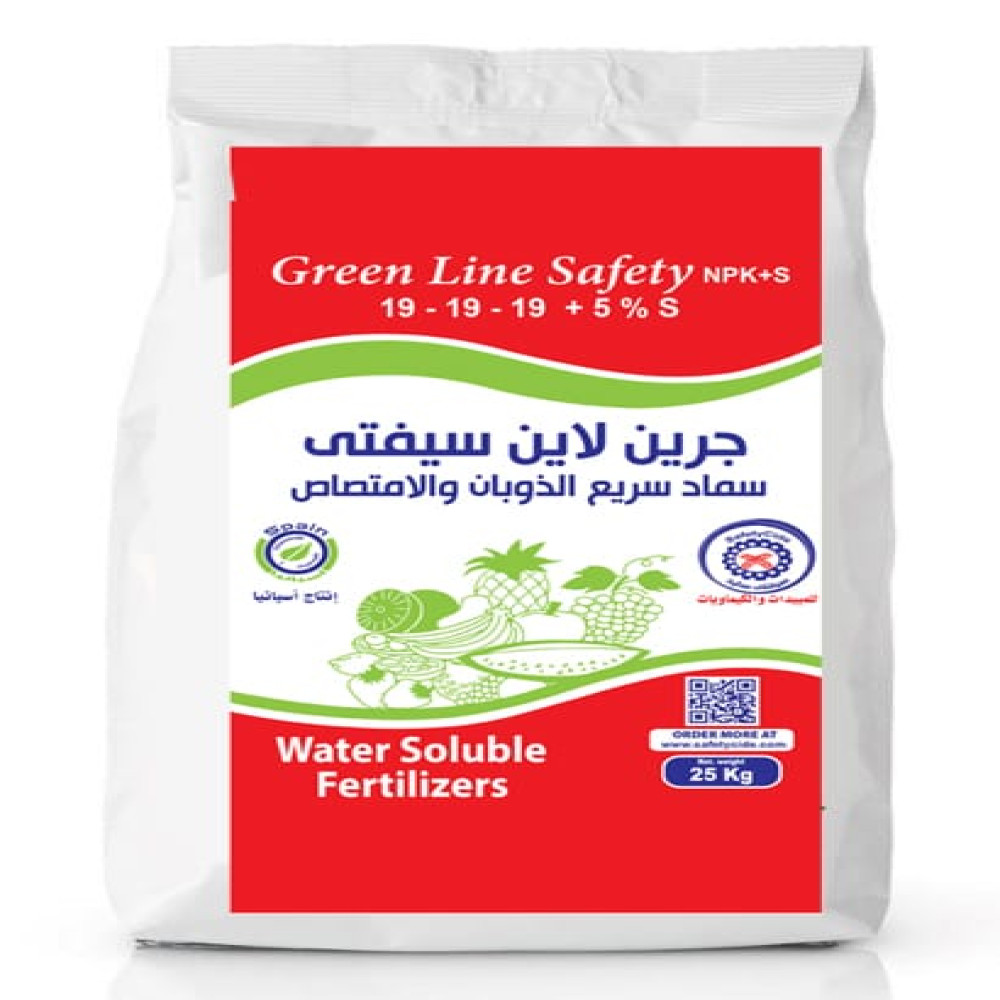
Installation:
Phosphorus: 9%
Potassium: 47%
Compound benefits
Phos-potassium fertilizer is characterized by its rapid absorption, therefore, because the elements are loaded with amino acids, carboxylic acids, and monosaccharides.
The compound is characterized by the presence of phosphorus in two forms: phosphate as a nourishment and phosphate as a prevention and treatment of
Fungal diseases such as: downy and powdery mildew diseases in onions, cucumbers, cantaloupes, and grapes
Phytoncera fungal diseases, such as: late blight in potatoes and tomatoes
Pythium and Fusarium fungal diseases on: vegetable and fruit seedlings (root rot)
It also contains potassium, as well as zinc and magnesium. Therefore, the potassium phosphate compound has a major role in plants, especially in raising the plant’s immunity. Potassium phos fertilizer also works to increase the efficiency of the process of flowering, setting, and growth of the fruit stage in different crops, which increases the size of the crop and the quality in terms of color. The shape and taste
Dosage and frequency of use:
Application and time of use, usage rates and yield
Foliar spraying every 7 days during the crop growth period (vegetative, floral, fruitful) 1-3 cm/liter of water for vegetables
(tomatoes - potatoes - onions - cucumbers - cantaloupe)
Fertilizing with water. Irrigation 3 days after transplanting. Repeat 2 times a week. 1-1/2 liter/acre. Vegetables (after transplanting)
Foliar spraying every 7 days during the period of vegetative growth, flowering, and fruiting. 2-4 cm/liter of water for fruit and ornamental plants.
The addition is made with head water every 10 days during the growing season, 5 cm per 8 liters for fruit seedlings and ornamental plants (seedlings).
Installation:
Nitrogen:20%
%phosphorus: 20
% Potassium: 20
Compound features
X-Press is an integrated ground and foliar fertilizer that contains a group of macroelements and microelements that are quickly dissolved and absorbed
X-Press contains nitrogen, phosphorus and potassium in pure, easily absorbed forms, so it increases the total. The vegetative
X-Press treats the symptoms of macro- and micro-element deficiency in plants. X-Press reduces stress resulting from heat and frost
Usage rates
| stage to use | Dosage (kg/acre/day) | The crop |
| Immediately after transplanting | 2-3 | Vegetables |
| Before flowering | 2-4 | the fruit |
| Branching stages | 1.5-2 |
Field crops |
89 in stock


Reviews
There are no reviews yet.